⛩️ How to visit a shrine or temple in Japan
S H R I N E S A N D T E M P L E S F O R A L L
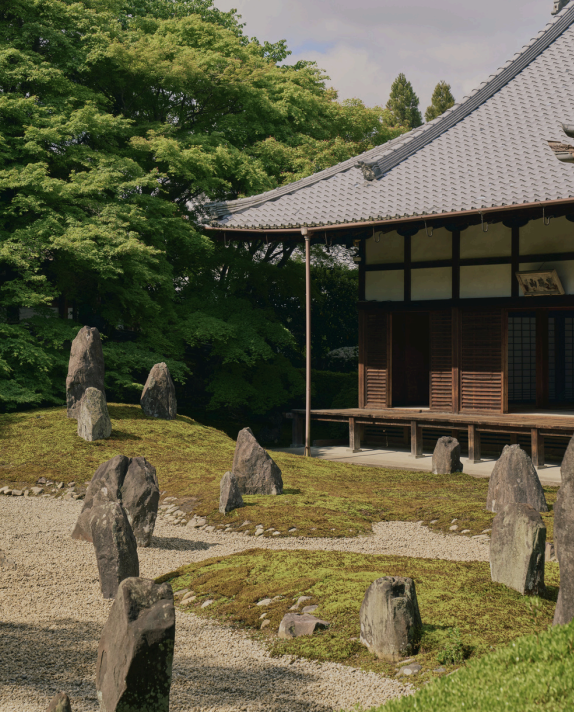
You’ll find colorful shrines and majestic temples all across Japan.
Feel free to visit them and soak up the serene atmosphere, regardless of your own religious beliefs.
S H R I N E ? T E M P L E ? W H A T ’ S T H E D I F F E R E N C E ?
Shrines are maintained by adherents of Shinto, Japan’s homegrown religion, and house Shinto deities and ancient sacred objects.
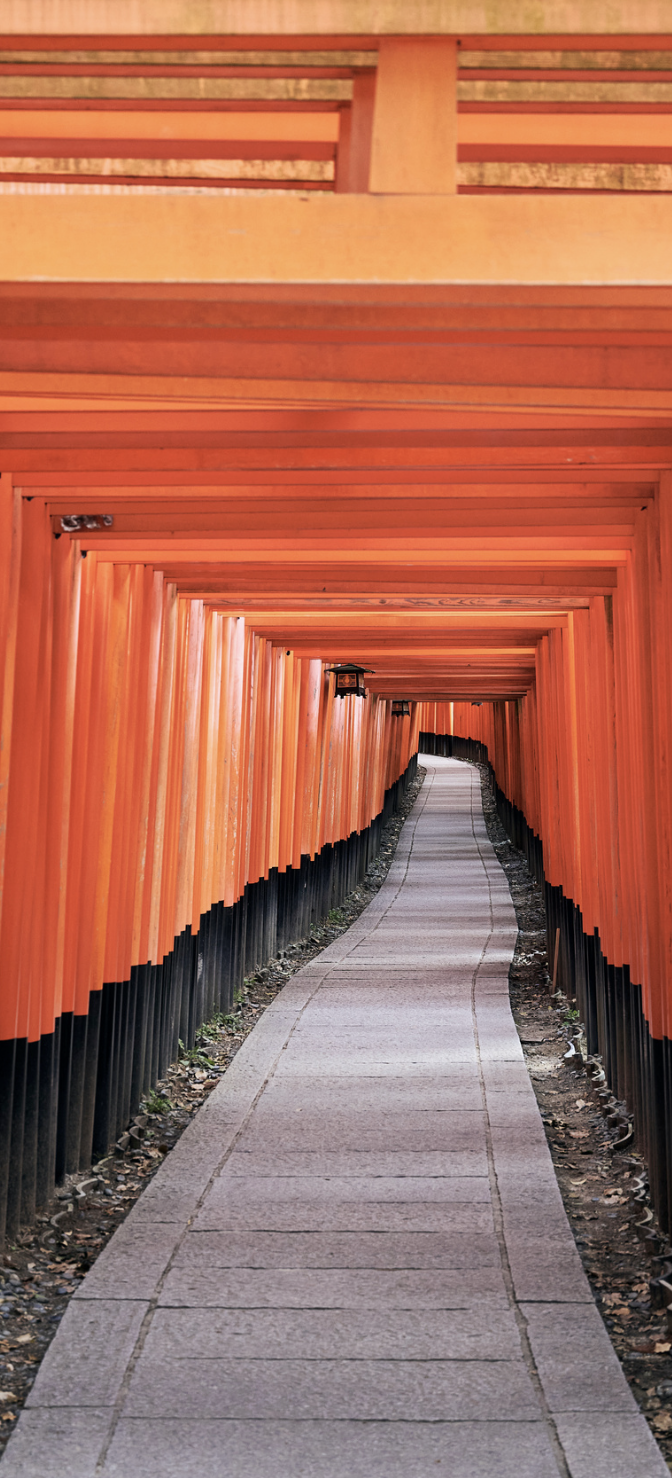
Shrines are separated from the outside world by a torii, a striking freestanding gate that’s often painted vermilion red.
Temples, on the other hand, serve Buddhism, and are built to enshrine Buddhist statues.
Temples have a sanmon gate – a large, roofed structure you step through to enter.
You’ll find the custodians of shrines and temples in Japan are laidback compared to their counterparts in other parts of the world.
There are no dress codes as such, and you won’t be judged for not knowing all the customs – as long as you are respectful, you’ll be warmly welcomed.
T A K E A B O W
When approaching a shrine or temple, follow the lead of locals and bow at the torii or sanmon gate.
Take care not to step on the wooden beam laid into the floor of the sanmon gate (the beam is there to stop evil spirits, who can’t jump, from following you into the temple grounds).
And make sure you walk to the left or right of a shrine’s torii (only the shrine’s deity is meant to cross between the two pillars of the torii).
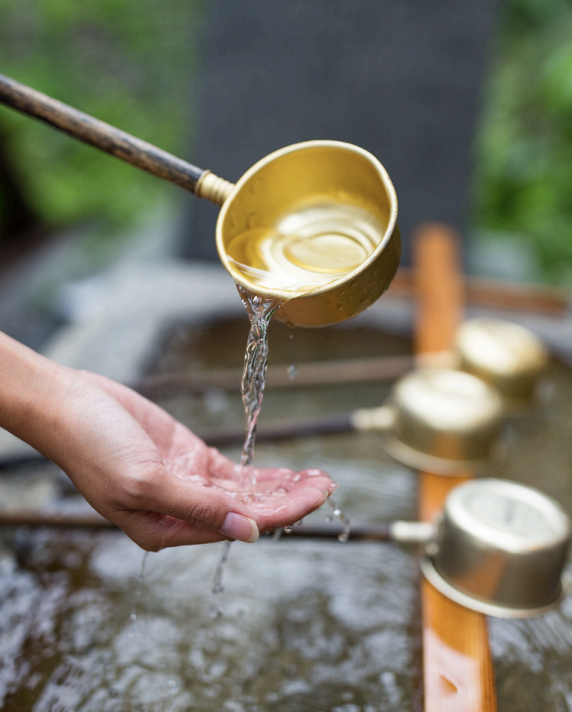
After entering the grounds of a temple, you can perform a purification ritual by washing yourself at the water basin or fountain.
Take one of the wooden ladles and wash both of your hands with water – first your left hand, holding the ladle in your right hand, before switching hands.
(You can also wash your mouth with this water, although this custom has been much less prevalent since the pandemic.)
S A Y A L I T T L E P R A Y E R
At a Buddhist temple, step up to the open mouth of the worship hall and bow.
Throw a coin into the offering box (a 5 yen coin is considered lucky), bow again, then silently put your hands together in prayer – this could be as simple as making a wish if you don’t want to pray.
Then bow once more.
You may like to buy and light an incense stick (be sure to extinguish the incense flame by waving it in the air, not blowing it out) before continuing to explore the temple grounds.
At a Shinto shrine, throw a coin into the offering box, and ring the bell to greet the deity.
Then bow twice, clap twice to express your respect to the deity, and say a prayer while you still have your hands clasped together.
Finally, bow once more.
To show respect, you can bow, making sure you are facing the shrine, when passing the torii on your way out.
D I G A L I T T L E D E E P E R
You may notice little pieces of paper tied to posts in the grounds of temples and shrines.
These are omikuji, or fortune readings, which you can obtain by making a small donation.
Readings containing the character 吉 predict good luck, while fortunes with the character 凶 are not so blessed – these ones are usually tied to a post and left behind by the recipient.
You can also buy an omamori, a good-luck charm contained in a small silk or paper envelope with a string tie.
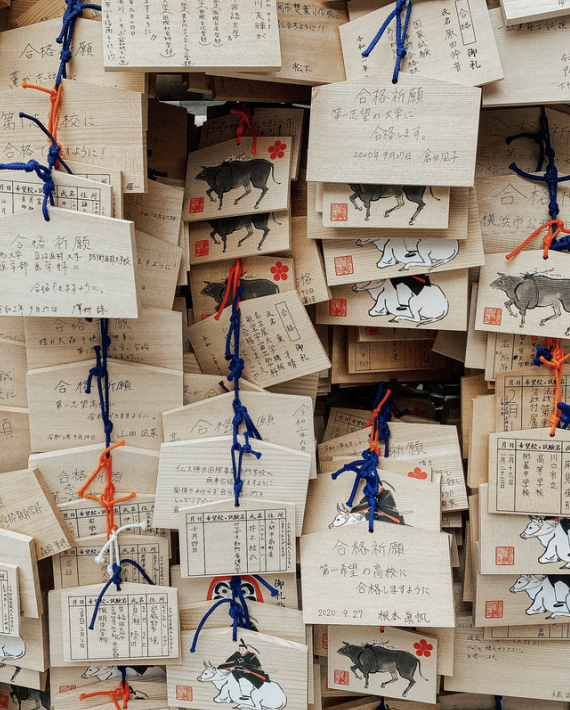
At a Shinto shrine you may also like to write a wish on the back of an ema, a small wooden plaque, and leave it hanging for the deity to consider.
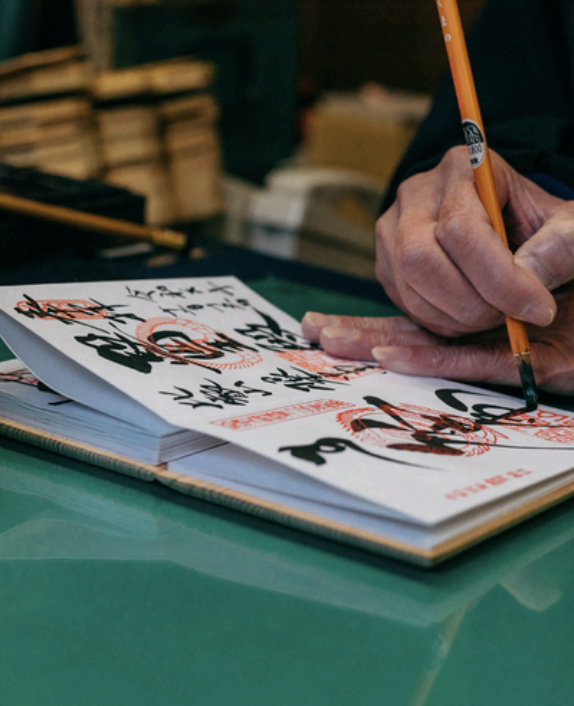
And don’t forget to have your goshuin souvenir book, which you can buy at shrines, temples and bookstores, stamped with a unique design as a lasting record of your visit.