🍽️ How to dine in Japan like a local
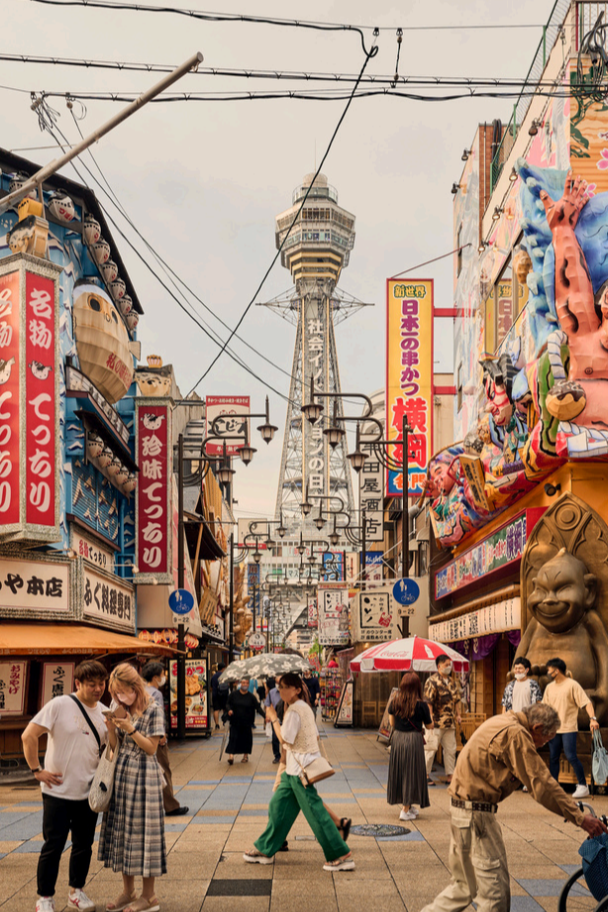
Japan’s dining scene is deservedly world-famous.
From simple noodle stands to elegant teahouses and
from rowdy izakaya bars to refined sushi restaurants,
here’s how to navigate the unspoken rules of eating
and drinking across the country.
Japan’s dining scene is deservedly world-famous.
From simple noodle stands to elegant teahouses and from rowdy izakaya bars to refined sushi restaurants, here’s how to navigate the unspoken rules of eating and drinking across the country.
G E T T I N G I N L I N E
Most casual eateries don’t accept reservations: you’ll need to line up outside if there are no seats when you arrive.
Upscale restaurants or very popular places with limited seating may take reservations – as native Japanese speakers, we’re happy to call and make these bookings for you.
If you have to wait, you may need to put your name down on a form and say how many people are in your party.
You’ll generally find the line moves quickly, as the diners already seated are expected to leave soon after finishing their meals.
If you decide after a while you don’t want to wait, be sure to put a line through your name on the form to let the waitstaff know you’ve left.
If you can be seated straight away, you’ll be asked how many diners are in your party.
See if you can catch the word “nanmei” – “how many people?” – when your host poses the question.
It’s perfectly acceptable to indicate the number with your fingers without speaking.
Restaurants may require each seated diner to order a meal – keep an eye out for the mention of a ‘one-order food system’ at the entrance to the eatery or on the menu.
Similarly, popular cafes and busy bars may also have a ‘one-order drink system’.
T A K I N G Y O U R S E A T
When you sit down at most Japanese restaurants, you’ll be given an oshibori, a dampened towel for cleaning your hands.
Tempting as it may be, you shouldn’t use the towel to wipe your face, even on a hot day.
If you’re visiting an izakaya, a Japanese-style tavern, alongside an oshibori you’ll be provided with a small snack, or otoshi, when you sit down.
This snack is designed to be enjoyed with a drink while you decide what dishes to order.
The snack also functions as a table charge – you’ll be billed around 300 to 500 yen for your otoshi.
Many eateries will have an English menu for you.
Alternatively, Japanese menus often have images of the dishes you can point to.
Your table may have a call button – press it to summon the waitstaff when you want to order or ask for water.
Water is free of charge, and complimentary hot or cold tea may also be provided depending on the style of restaurant.
Please note, however, that drinks menu items such as soda are not refillable.
E N J O Y I N G Y O U R M E A L
Before you start eating your meal, you may like to put your hands together and say: "Itadakimasu."
This phrase translates as “I humbly receive” and expresses your gratitude to the people who have prepared your food.
Rice plays a central part in Japanese food culture, so unsurprisingly there are some points of etiquette to note.
Rice is usually served in a separate bowl, which you should hold up towards your mouth when picking up with your chopsticks.
Please don’t plant your chopsticks in your rice, or pass food to your dining companions from chopsticks to chopsticks, as these gestures have symbolic meanings in Buddhist funeral ceremonies.

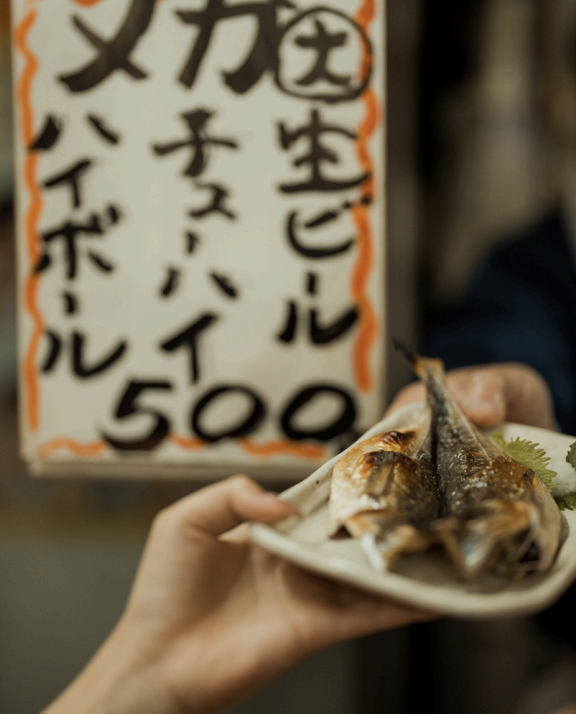
T H A N K I N G Y O U R H O S T
When you’ve finished your meal and are ready to pay and leave, you can ask for the bill by making a writing gesture or by requesting the “kaikei.”
As you stand up and head to the cashier or front counter, you may like to acknowledge the chef and his team by saying: “Gochisou-sama”, which
literally translates as “Thank you for the feast”.
They will in return thank you for your custom.
At the cashier, place the bill and cash in the small tray that’s presented to you, and take your change when it’s placed in the tray.
There’s no need to tip, in fact, if you attempt to leave a tip the cashier will assume you’ve forgotten your change and will try to return it to you.